Sharing Knowledge Across AI Clients and Projects
One notes repo, many AIs. Claude Code at my desk, Claude Projects on my phone, and Bleu overnight all read from the same brain on GitHub.
Walked back from coffee Tuesday morning. Phone in hand, brainstorming with a Claude Project about how to re-pitch a client whose scope had drifted. The Project already knew the client. It reads from a subdirectory of my notes repo on GitHub, so it had the proposals, the meeting notes, the rolling decision log. I didn’t have to introduce the client.
Twenty minutes of a real thinking partner, not a chatbot I had to feed context to.
The Claude on my laptop, the Claude that runs on a Mac mini under my desk, and the Claude Project I poke at on my phone all read from the same GitHub repo. Manus has already done it: I pointed it at the same repo for my ad work and it picked up where any Claude session would have, no special onboarding.
The Shape
GitHub is the backbone because it syncs the notes everywhere. Laptop, Mac mini, phone, any third-party agent I bring in. They all pull from the same source, and PR review is what lets Bleu write without me losing oversight. Obsidian is the librarian because the vault is shaped to be found in: _Index.md tables at every level, folder shape that mirrors how I actually think about the work, wiki-links that let any AI walk from one note to the next without being told where to look. Every file is plain markdown, too — the part that makes a vault legible to an agent at all.
WorkHoodie-Notes/
├── CLAUDE.md              # boot file: role, voice, protocols
├── _Home.md               # dashboard
├── Inbox.md               # raw captures
├── Journal/2026/          # weekly rollups
├── Networking/            # contacts I'm staying in touch with
├── Clients/               # active engagements, one folder each
├── Products/              # things I'm building, one folder each
├── Leads/                 # being researched
├── Templates/             # one per recurring kind of note
└── ...
Three surfaces pull from it.
- Claude Code at the desk. Local checkout, full file access. Where I draft, file, and ship.
- Bleu on the Mac mini. Scheduled jobs and a Telegram listener, writing back via PR when he files notes.
- Claude Projects on web and phone. One Project per client, product, or initiative, each scoped to that slice of the repo via the GitHub connector.
One Project per Slice
Each Claude Project on my account is wired through the GitHub connector to one subdirectory.
- A client Project reads
Clients/[Client]/. Proposals, meeting notes, the rolling decision log for that engagement. - A product Project reads
Products/[Product]/. Feature decisions, customer feedback, the rolling roadmap. - A leads Project reads
Leads/. Research, follow-ups, fit assessments. - A journal Project reads
Journal/2026/. What I’ve been working on, what’s stuck, where I changed my mind.
The Project for one client doesn’t see another client’s notes, the product roadmap, the leads pipeline, or my journal. When I’m prepping for a call I open the Project for that client on my phone and we’re already mid-conversation.
The trap when setting this up is one mega-Project that reads everything. It feels efficient and isn’t. I scope per Project the way I’d scope per Slack channel. One topic, one set of files, one focused conversation. If a topic is broad, I split it.
The Loop
I do my best brainstorming away from the desk. On a walk, in line somewhere, sitting on a bench between meetings. Phone in hand.
I open the right Project, talk or thumb at it, and storm. It knows the client and the role and my voice. We riff. Twenty minutes later I’ve got a conclusion I want to keep.
That used to die in my phone’s Notes app, buried under everything else I’d dumped there. Email to myself, scrolled past tomorrow. By Wednesday the storm was gone and I was re-having the same conversation a different way.
Now I send the conclusion to Bleu on Telegram in one message. Bleu pulls latest from the repo, drops the notes into the right folder, and opens a PR. I approve from my phone before I get back to my desk, or in the morning if it’s late. Next time I open the same Project, the conclusion is there as context.
I reach for the phone Project more than I open Claude Code at my desk now. The desk used to be the real workspace. The phone was the passive surface. Once the phone Project had real context, that flipped.
Try It Yourself
You don’t need Bleu to start. You need a notes repo on GitHub and a Claude Project wired to one slice of it.
Step 1: Stand up the shared-context repo
Hand this to Claude Code in a fresh directory. It’ll scaffold the boot file, the folder shape, and the index pattern that makes the vault discoverable.
Step 2: Wire a Claude Project to one slice
Now connect a Claude Project to a single subdirectory of that repo via the GitHub connector.
-
On claude.ai, create a new Project. Name it after the slice:
Acme Co.,Northwind Labs,Leads. Open Project settings → Files → ”+” → connect GitHub. Authorize the Claude app on the repo.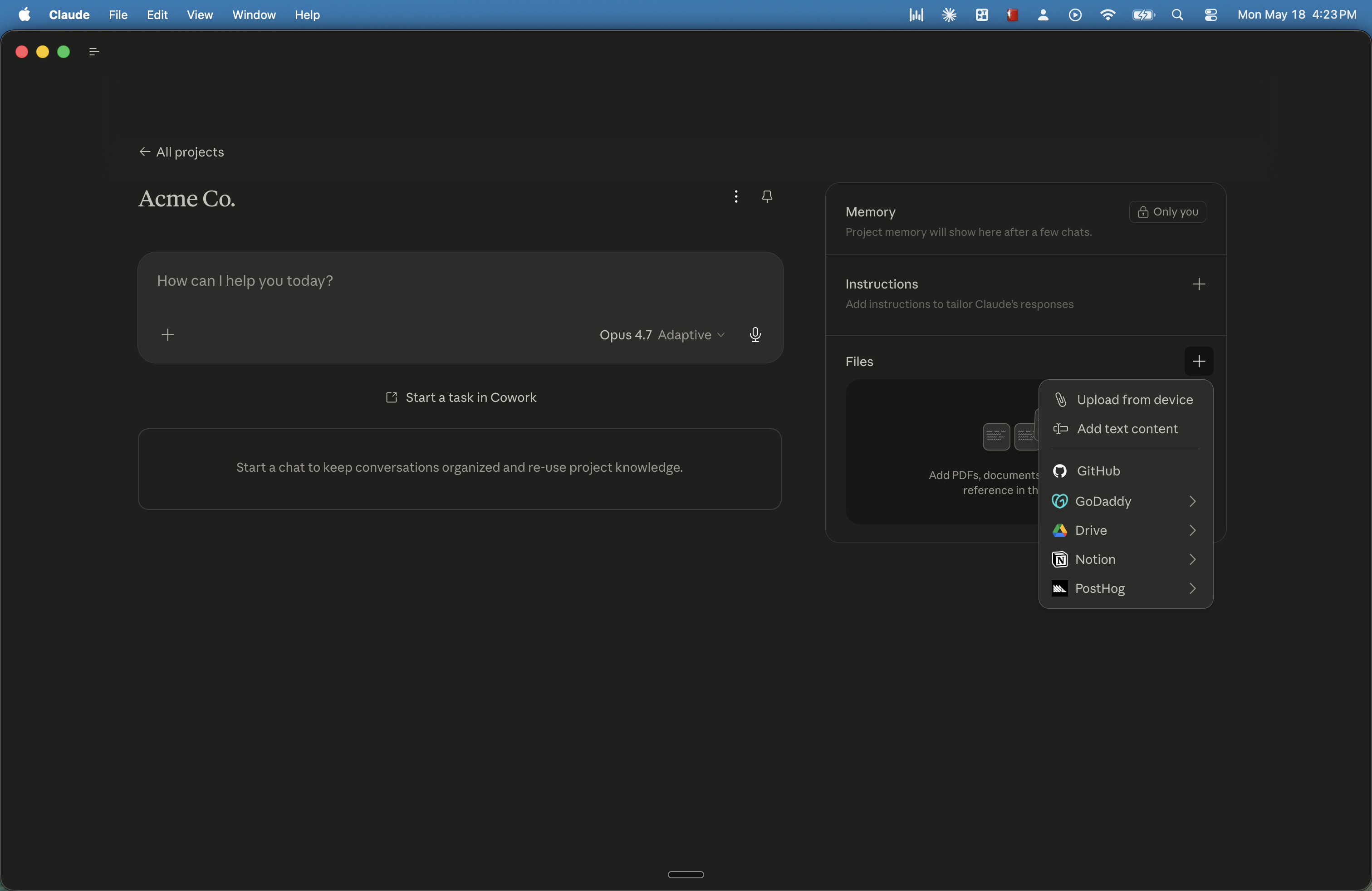
-
In the file picker, drill into one subdirectory and check the files you want included.
Clients/Acme Co./, not the whole tree.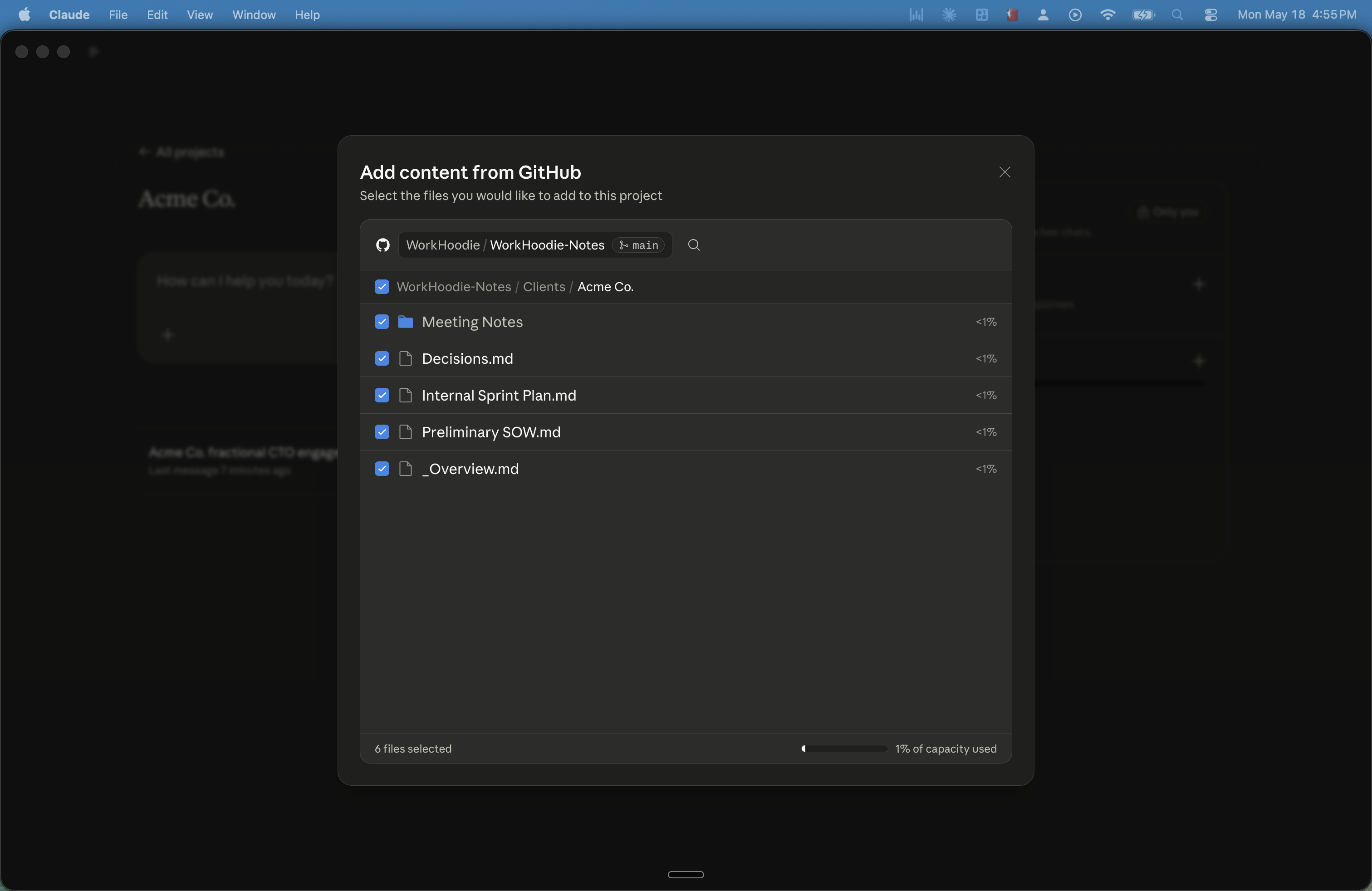
-
Open the Project on your phone. Ask it something only that slice would know, like “what did I decide about pricing last week?”, and confirm it answers from the notes, not from vibes.
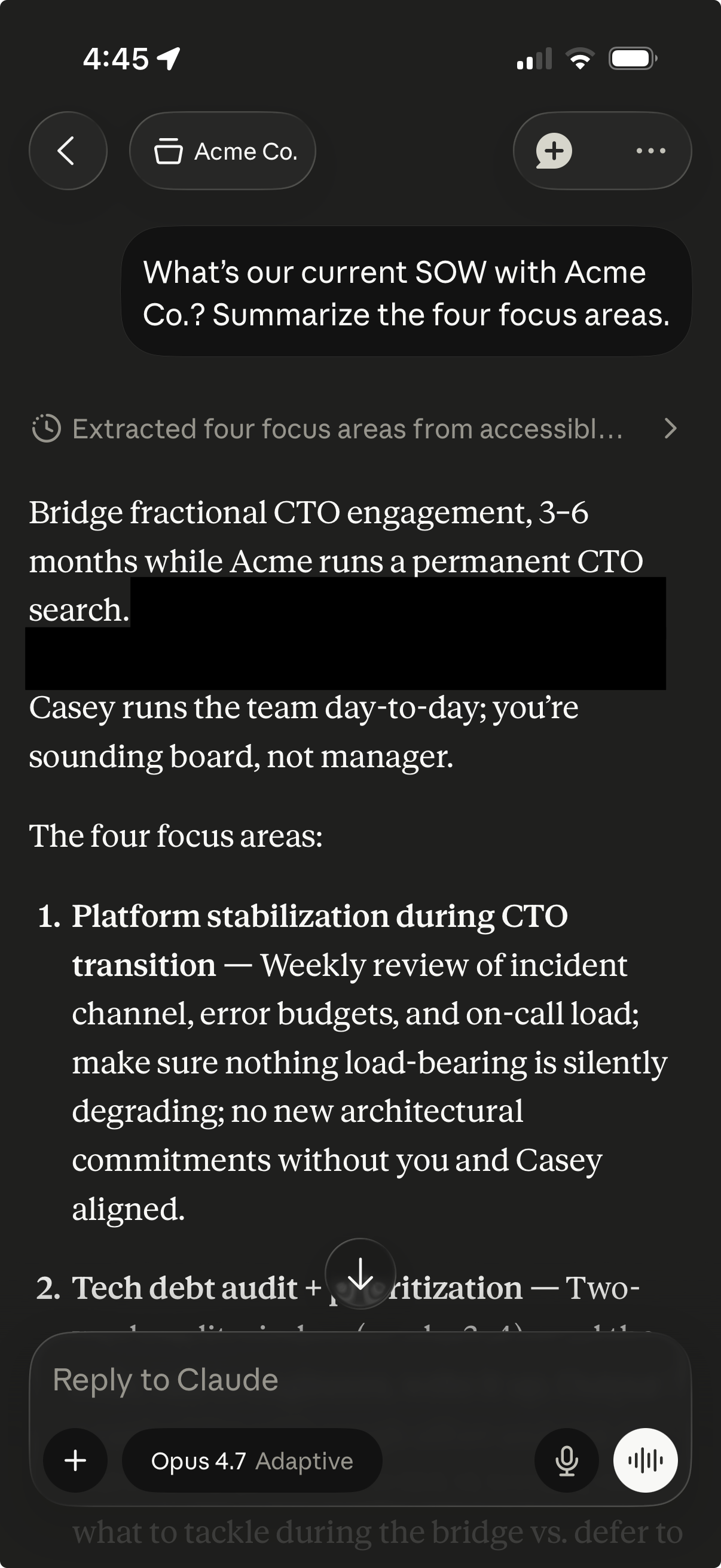
Set it up once and whatever I bring into it next is reading from the same brain that Bleu and I have been keeping together.